
Before the run: how rounded corners, board thickness and matte lamination decide whether a board book survives handling
A 24-page board book for readers aged 0–3 reaches its pre-press meeting with the cover signed off. Three specifications decide whether it survives its first year in a nursery.
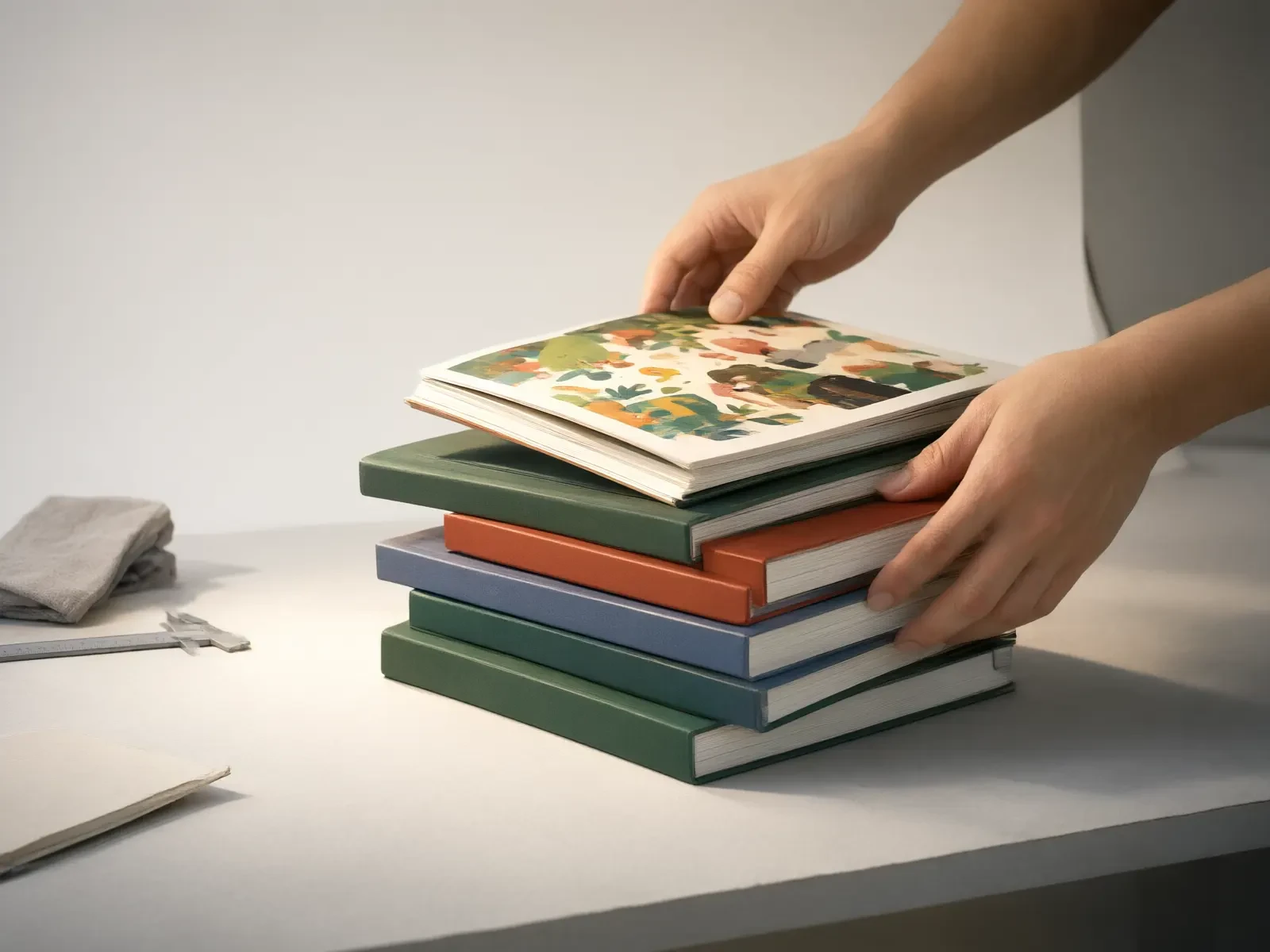
At a publisher's pre-press meeting, the production editor puts three things on the table: a blank board book dummy, a rounded-corner die, and a sheet that has been matte laminated, next to a colour proof and a binding sample. The book is 24 pages, 152 mm square, for readers aged 0–3. Sales has signed off the cover and the printer is waiting for the release. The meeting has to settle three specifications, and they decide whether the book survives its first year in a nursery.
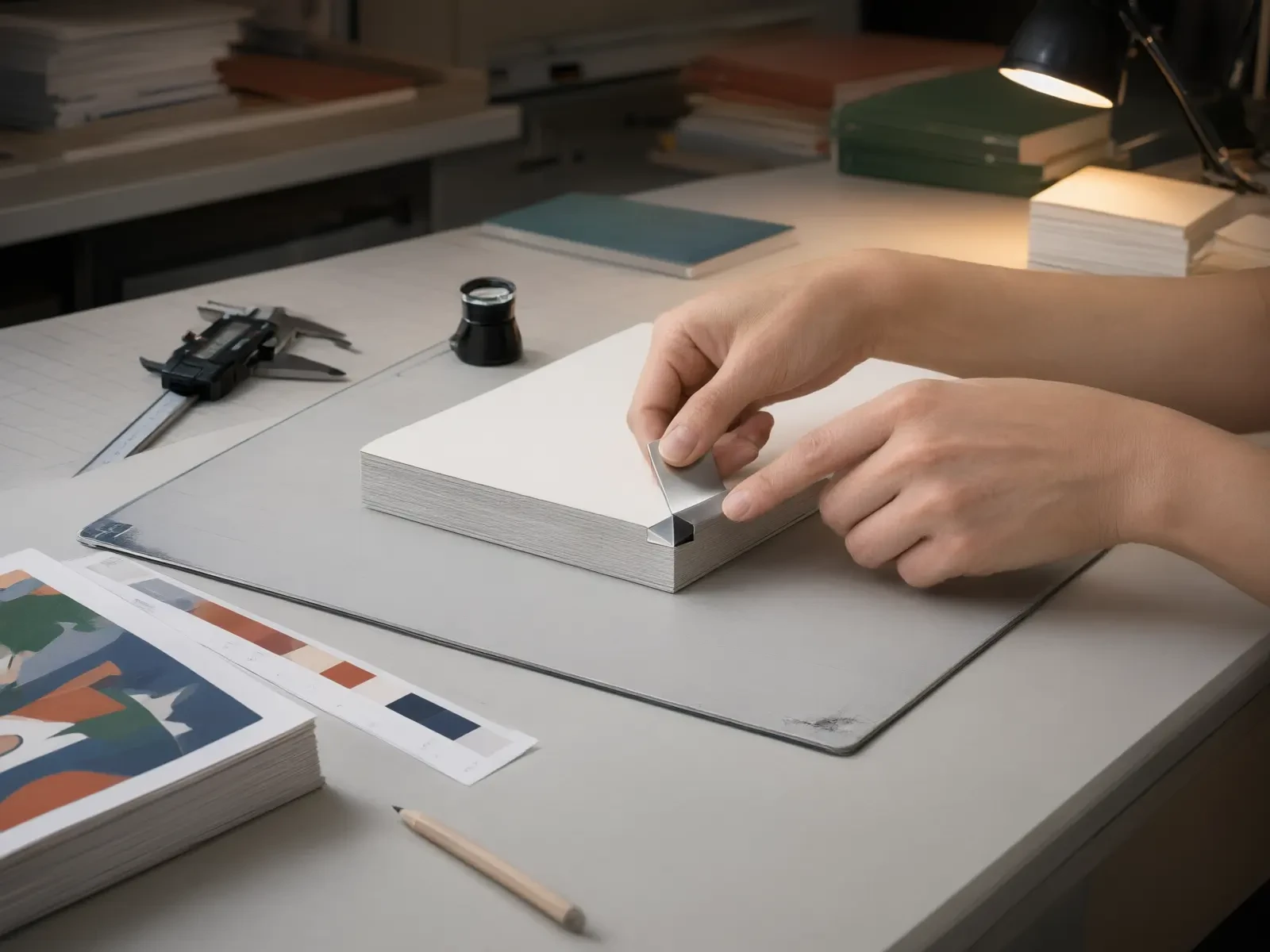
Durability usually fails in three places
Board books fail at three contact points: the cover face scuffs or stains, the rounded corner crushes, delaminates or lifts, and the spine or hinge stiffens until pages no longer turn cleanly. Each is a different mechanical problem, and a specification that solves one can make another worse. That is why pre-press sign-off looks at a finished dummy, not only a PDF.
Rounded corners: the radius is a load design first
A square corner concentrates the shock of a drop or a bite at a single point; a radius spreads it along an arc and removes the sharp point that catches pages and mouths. Most board books use a 5–10 mm radius, with 6–8 mm the most common; titles for ages 0–3 often take 8–10 mm for a larger safety margin, at the cost of cutting more image, so borders and folios need room.
Below roughly 4 mm the risk changes direction. The arc is too tight for 2–3 mm board: the die has to cut dense material through a very small turn, and the corner tends to crush, whiten or delaminate, while the film lifts along the cut. The die has to match the finished page thickness, not just the greyboard. Check three things on the dummy: a continuous arc, no step between layers, and no white cracking at the cut. Keep type and characters at least 8–10 mm inside the trim, with extra clearance at the corners.
Board thickness: stiffness, weight and the spine
Thickness means the total thickness of one finished page. Board books commonly run 1.2–2.5 mm: 1.5 mm is close to a standard trade edition, 2 mm is common for 0–3 and premium editions, and 2.5–3 mm appears in gift and library editions. These are ranges, not a ranking. A thicker page is stiffer and resists creasing from small hands, but weight, spine width and cost rise with it.
A 24-page book has 12 laminated leaves. Page thickness of 2 mm versus 2.5 mm can change the spine by about 6 mm before the cover is added, which in turn changes carton weight, pallet height, freight and how the first page feels to open. When the spine is too tight, a thicker page is actually harder to turn. Grain direction, single- or double-layer construction and the weight of the facing paper all belong in the specification alongside finished page thickness.
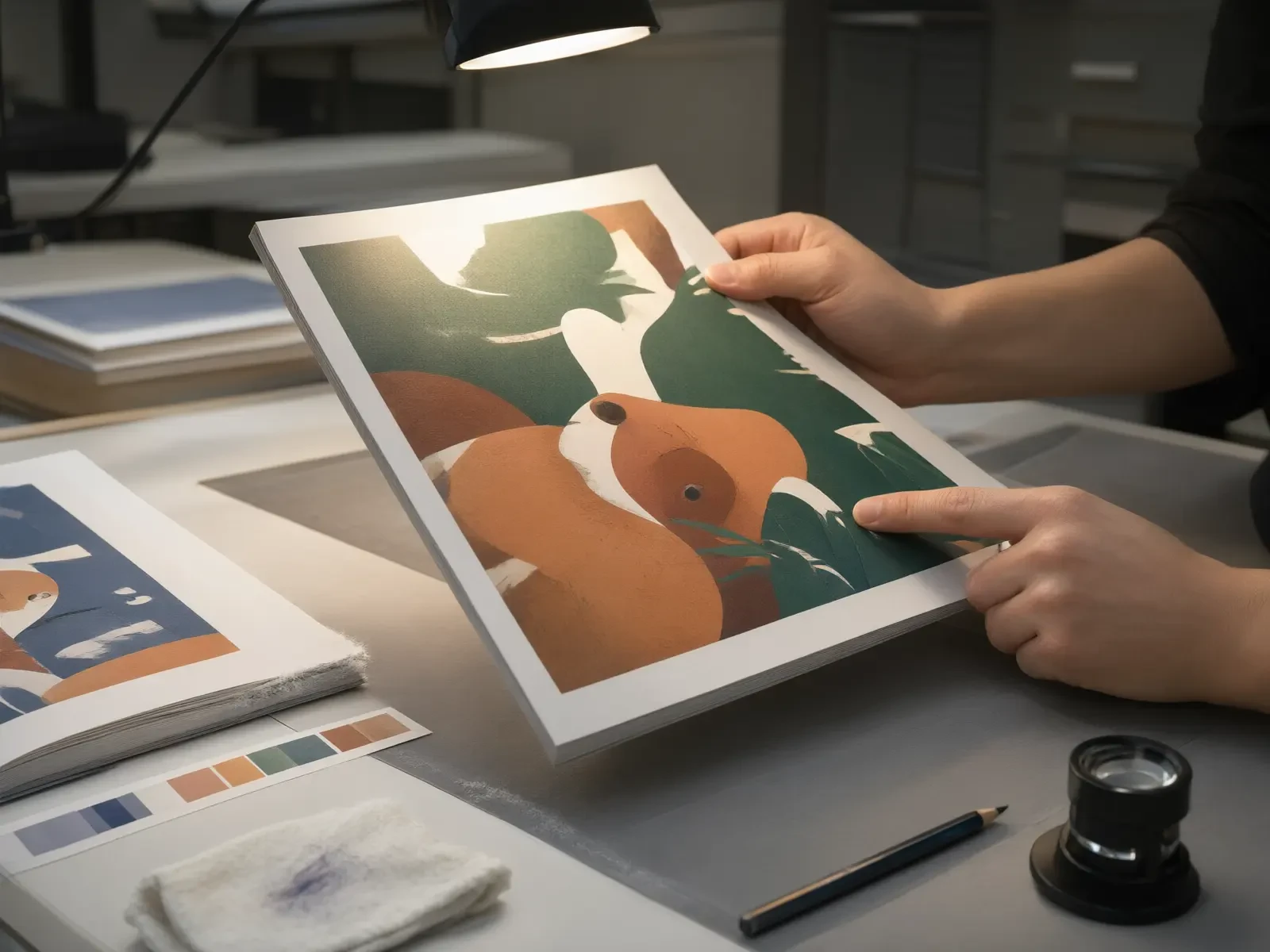
Matte lamination: protects the surface, not the structure
Matte film cuts glare, protects ink and wipes clean. Standard BOPP thermal film runs about 18–25 microns; 20 microns on 2 mm board is roughly 1% of the thickness. It improves surface wear but cannot stiffen a soft board or rescue a crushed corner. Matte is not waterproof either: cut edges, the spine glue line and board exposed at the corner stay vulnerable.
Standard matte film shows fingerprints and scuffs more on dark solids. Children's titles in heavy use should specify scuff-resistant matte, which is a different specification from standard matte. Lamination happens before casing and die-cutting; if adhesive, pressure or curing are poorly controlled, the film blisters or lifts at the cut. Approve the die-cut finished corner, not a flat laminated sheet.

The three specifications have to be read together
2.5 mm pages with a 4 mm radius and standard matte put stress on a very tight edge; 1.5 mm pages with a 10 mm radius and scuff-resistant matte give a safer corner but a softer page and more image loss. The usual balance for 0–3 is 2 mm pages, a 6–8 mm radius and 18–25 micron scuff-resistant matte, checked on a finished dummy at the spine. That is a starting point; trim size, extent and age all change the answer.
What goes on the pre-press confirmation sheet
Back at the table, the editor turns the dummy, drops it from waist height, wipes a corner with a damp cloth and checks the spine. The sheet records not only parameters but which sample was used to verify them.
| Specification | What is confirmed | What it affects |
|---|---|---|
| Structure | Greyboard type, layers, finished page thickness, weight of facing paper | Stiffness, flatness, spine width |
| Corners | Radius and tolerance, die, all pages and cover | Safety, corner strength, image safe area |
| Lamination | Film type, matte grade, microns, one or two sides, adhesion | Wear resistance, risk of lifting |
| Print and spine | Colour proof, screen, spine width, hinge allowance, finished dummy | Colour, feel when opening, structural sign-off |
The editor does not choose the thickest board, or the most matte film. She chooses a set that has been turned, dropped and wiped on a finished dummy. The point of the pre-press meeting is to move failure from the nursery to the sample bench.
We confirm board thickness, corner radius and cover finishing at quotation, and pre-press checks, proofing, binding and export packing happen in one flow. Give the production team trim size, extent and a durability target, and the specification comes back executable before the run.
References
Page thickness, film gauge and corner radius are settled per title. These are the published sources the specification notes above refer to.
Related
Specifying a title?
Send the trim size, extent and paper choice. Binding route, spine width and cover finishing are confirmed before the run.